
helping Maryland Heights families secure their dream homes with confidence.
What’s Covered on this page
- Five Methods That Give You a Reliable Home Value Estimate
- How to Run a Comparable Sales Analysis on Your Own
- How Accurate Free Online Home Value Estimators Really Are
- How accurate are online home value tools like Zillow for St. Louis properties?
- What is the biggest mistake people make when estimating their own home’s value?
- How does the St. Louis block-by-block market affect which comparable sales I should use?
- When should I use the cost approach versus a comparable sales analysis?
- Does the St. Louis County tax assessment reflect my home’s true market value?
- Why do I need an accurate property value estimate before applying for a mortgage or refinance?
Need to know how to estimate a property’s value accurately?
Get your free consultation.
Five Methods That Give You a Reliable Home Value Estimate
You do not need a licensed appraiser to get a solid number. You do need a method rooted in real data. Here are five ways that work on their own, and work even better when you use two or three together.
- Run a Comparable Sales Analysis. This is the standard for a DIY value estimate. Look at homes in your area that sold within the last 90 days. They should match yours in size, age, condition, and lot size. In St. Louis neighborhoods like Soulard or Tower Grove South, block-by-block changes can swing value by tens of thousands. Pull at least three comps from your county assessor’s site or a public records database. Average the sale prices, then adjust up or down based on how your home stacks up.
- Check Online Valuation Tools. Sites like Zillow’s Zestimate or Redfin’s estimate use algorithms to calculate value. They’re a decent starting point. But they miss things like recent renovations, deferred maintenance, or that your basement floods every spring. According to Zillow, their Zestimate has a national median error rate of about 2.4% for on-market homes. Off-market? That error jumps to roughly 7.5%. So treat those numbers as a range, not a verdict.
- Review Your County Tax Assessment. The St. Louis City or St. Louis County assessor assigns a value to every property. You can look yours up online in minutes. Keep in mind, assessed values often lag behind the market. They’re updated on a set cycle, not in real time. Still useful as a floor estimate.
- Request a Broker Price Opinion. A local real estate agent can walk through your home and give you an informal estimate. It’s not an appraisal, but a good agent who knows the Central West End or Benton Park market will spot things an algorithm never could. Most agents offer this for free if they think you might list with them eventually.
- Use the Cost Approach. This one’s more hands-on. You estimate what it would cost to rebuild your home from scratch, subtract depreciation, then add the land value. It works for newer construction or unique properties where comps are hard to find. It’s less useful for a 1920s brick four-family in South City where the character of the building is half the value.
We see people rely on just one method all the time. That’s where mistakes happen.
A client in the Shaw neighborhood once told us their home was worth $280,000 based on an online tool. When we looked at actual comps and factored in their unfinished second floor, the realistic number was closer to $240,000. That $40,000 gap would have created real problems during a mortgage pre-approval or a cash-out refinance.
And here’s the part most people miss. The estimate comes from layering methods. Run the comps yourself. Check the online tools. Then compare both against your tax assessment. If all three land in a similar range, you’ve got a number you can trust.
But if the numbers are all over the place, that is a sign you need more information before making any big decisions.
Getting your property value right matters most when you’re preparing for a home loan pre-qualification or exploring refinancing options. A number that’s too high can stall your loan. A number that’s too low means you might leave equity on the table. Either way, an accurate estimate puts you in a stronger spot before you ever sit down with a lender.
How to Run a Comparable Sales Analysis on Your Own
A comparable sales analysis is the backbone of any property value estimate. It’s exactly what appraisers do, and you can learn the basics yourself. The idea is simple: find homes like yours that sold recently, then use those sale prices to figure out what yours is worth.

Here’s what people get wrong. They pick comps that look similar on the surface but miss key details. A four-bedroom in Soulard that sold last month might seem like a perfect match for your four-bedroom in Tower Grove South. But if that Soulard home had a full gut renovation and yours hasn’t been updated since 1998, that comp will throw your number way off.
The Step-by-Step Process
Follow these steps to build a solid comparable sales analysis on your own:
- Start with homes that sold within the last 90 days. Anything older gets less reliable, and the St. Louis market shifts fast enough that six-month-old data can mislead you.
- Stay within a half-mile radius of your property. In denser neighborhoods like Benton Park or The Hill, tighten that to a quarter mile.
- Match the basics first: bedrooms, bathrooms, square footage within 10 percent, and similar lot size.
- Look at condition and upgrades. A remodeled kitchen adds real value. So does a finished basement.
- Pull at least three comps. Five is better. Throw out the highest and lowest, then average the rest.
- Adjust for differences. If a comp has a two-car garage and yours has street parking, subtract value from that comp’s price before averaging.
We see people skip that last step all the time. Adjustments are where accuracy lives.
Where to Find the Data
You don’t need paid tools. The St. Louis County assessor’s website shows recent sales and property details for free. Zillow and Redfin list sold prices too. But be careful with their automated estimates. Those algorithms don’t walk through your house or notice the new roof you put on last year.
And here’s something most people don’t realize. Public records sometimes lag behind actual closings by weeks. If you’re trying to estimate your property’s value for a mortgage pre-approval or a refinance, even small gaps in data matter.
Say you’re looking at a brick two-family in Dutchtown. You find three similar two-families that sold recently. One went for $145,000, another for $160,000, and a third for $152,000. The $160,000 one had brand-new mechanicals. Yours does not. So you’d adjust that comp down maybe $8,000 to $10,000 before averaging. Your rough estimate lands around $149,000 to $152,000.
That’s a number you can work with.
But a rough estimate is just a starting point. If you’re thinking about tapping your home’s equity through a cash-out refinance or exploring mortgage refinancing options, having a realistic value in mind helps you walk into that conversation prepared. Our team at our St. Louis office can help you understand how your estimate connects to real loan options.
One more tip from years of working with St. Louis homeowners. Pay attention to whether your comps are investor flips or regular owner-occupied sales. Flips often sell at a premium because of cosmetic upgrades. If your home hasn’t been flipped, using those as comps will inflate your estimate. Stick with sales that match your home’s actual condition.
The goal isn’t perfection. It’s getting close enough to make smart decisions about your next move.
How Accurate Free Online Home Value Estimators Really Are
Let’s be honest. Most people start here. You type your address into a free tool and get a number in seconds. It feels like an answer, but it’s really just a starting point.
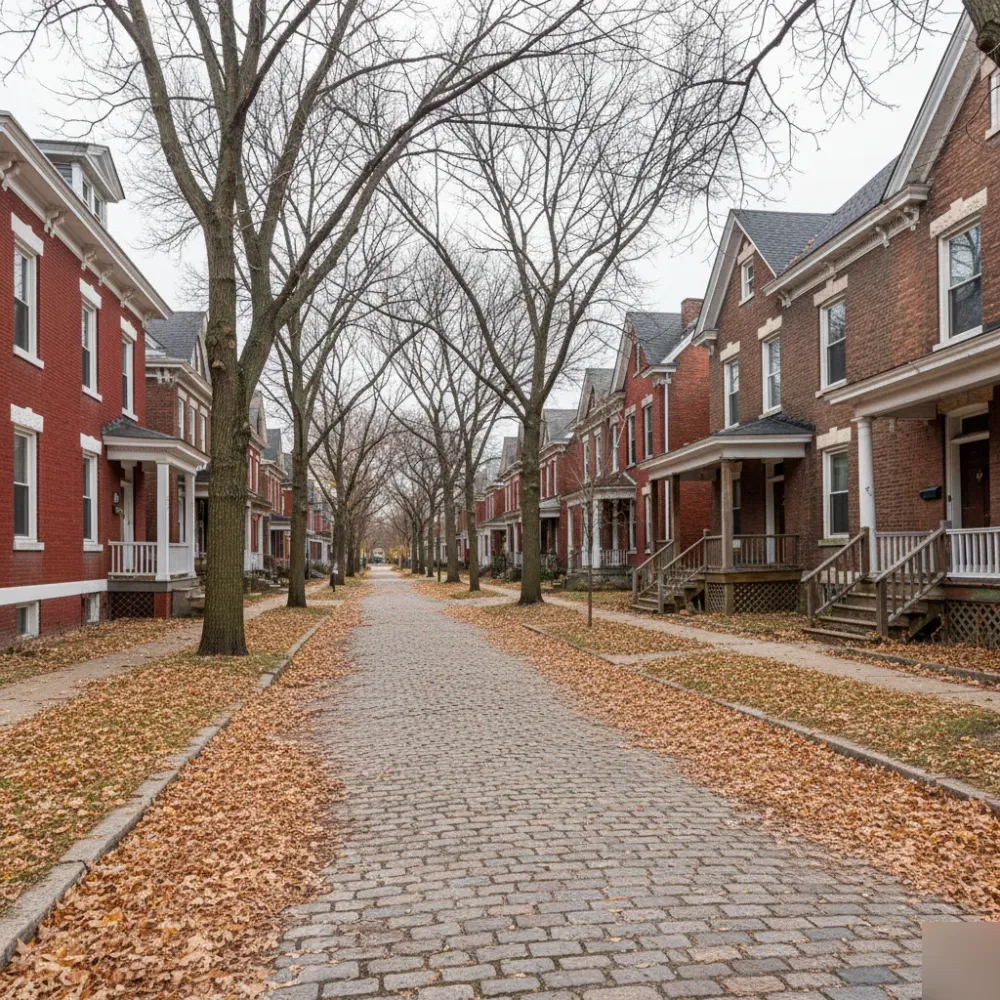
These tools use what’s called an Automated Valuation Model, or AVM. They pull public data like recent sales, tax records, and square footage. Then an algorithm crunches it all into one estimate. The problem? That algorithm has never walked through your front door.
What the Data Actually Shows
According to Zillow’s own reporting, their Zestimate has a national median error rate of about 2.4% for on-market homes. That sounds small. But on a $250,000 home in St. Louis, that’s a $6,000 swing in either direction. And for off-market homes, the error jumps to around 7.5%. That’s nearly $19,000 off. If you want to understand what homebuyers can expect with appraisals, Freddie Mac’s consumer guide breaks down how lenders use valuations and what happens when the numbers don’t line up.
We see this gap cause real confusion for homeowners all the time.
Someone in South City might check three different estimators and get three wildly different numbers. One says $210,000. Another says $235,000. A third lands at $195,000. So which one do you trust? None of them completely.
Why the Numbers Miss the Mark in St. Louis
St. Louis has a housing stock that’s tough for algorithms to read. You’ve got century-old brick homes in neighborhoods like Tower Grove South sitting next to fully renovated properties. A tool can’t tell the difference between original knob-and-tube wiring and a full electrical upgrade. It doesn’t know you finished the basement last year or that the house next door sold low because of foundation issues.
Here are the biggest things free estimators tend to miss:
- Interior condition, including updated kitchens, bathrooms, and flooring
- Lot-specific features like a detached garage, fenced yard, or alley access
- Neighborhood micro-trends that shift block by block
- Deferred maintenance that drags value down but doesn’t show in tax records
These aren’t small details. They can shift a property’s real value by tens of thousands of dollars, and the algorithm just doesn’t have access to them.
When Free Tools Are Still Useful
Don’t throw them out entirely. They’re good for one thing: a rough ballpark. If you’re just curious about your home’s general range, go ahead and check. But if you’re making a financial decision based on that number, you’re building on shaky ground.
And that’s the key split. Curiosity versus action.
If you’re thinking about a cash-out refinance or exploring mortgage refinancing options, a rough online estimate won’t cut it. Lenders need something more grounded. Most people don’t realize this until they’re already deep into the process and a low estimate stalls everything.
I’ve worked with homeowners in the Bevo Mill area and near Lafayette Square who were shocked at how far off their online estimates were. One client’s Zestimate was $30,000 below what a proper comparable sales analysis showed. That gap would have changed the entire loan scenario.
So use the free tools to get oriented. Think of them like a weather forecast, helpful but not something you’d bet your house on. For anything involving real money, you need a method that accounts for what’s actually happening inside your home and on your specific block in St. Louis.
If you’re already leaning toward a refinance or exploring your home loan options, getting a reliable value estimate early saves you time and headaches down the road.
Frequently Asked Questions
Common questions about How to Estimate a Property’s Value Accurately (Without Hiring an Appraiser) in Suite 100 St. Louis
How accurate are online home value tools like Zillow for St. Louis properties?
How accurate are online home value tools like Zillow for St. Louis properties?Online tools are a starting point, not a final answer. Zillow’s own data shows a median error rate of about 2.4% for on-market homes — but that jumps to roughly 7.5% for off-market properties. In St. Louis, where values can shift block by block in neighborhoods like Soulard or Tower Grove South, that gap matters. These tools miss recent renovations, deferred maintenance, and local quirks. Always cross-check with real sold comps and your county tax assessment before trusting a single number.
What is the biggest mistake people make when estimating their own home’s value?
What is the biggest mistake people make when estimating their own home’s value?The biggest mistake is relying on just one method. One number from one source is easy to get wrong. A homeowner in the Shaw neighborhood once believed their home was worth $280,000 based on an online tool. When actual comps and the unfinished second floor were factored in, the real number was closer to $240,000. That $40,000 gap can stall a mortgage or cost you real equity. Layer at least two or three methods together — comps, online tools, and your tax assessment — before making any big decisions.
How does the St. Louis block-by-block market affect which comparable sales I should use?
How does the St. Louis block-by-block market affect which comparable sales I should use?St. Louis neighborhoods can shift in value street by street, so picking the right comps is everything. In denser areas like Benton Park or The Hill, stay within a quarter-mile radius. A home in Soulard and one in Tower Grove South may look similar on paper but carry very different values. Always match bedrooms, bathrooms, square footage within 10 percent, condition, and lot size. The St. Louis County assessor’s website lets you pull recent sales for free — use it before trusting any algorithm.
When should I use the cost approach versus a comparable sales analysis?
When should I use the cost approach versus a comparable sales analysis?Use the cost approach when comparable sales are hard to find — like for newer construction or a unique property. It works by estimating rebuild costs, subtracting depreciation, and adding land value. For most St. Louis homes, especially older brick properties in South City or Dutchtown, a comparable sales analysis is more reliable. The character and history of a 1920s four-family can’t be captured by rebuild costs alone. Use both methods together when you can, especially if you’re preparing for a home loan or refinance.
Does the St. Louis County tax assessment reflect my home’s true market value?
Does the St. Louis County tax assessment reflect my home’s true market value?Not always — and that’s worth knowing before you use it as your only number. The St. Louis City and St. Louis County assessors update property values on a set cycle, not in real time. That means your assessed value can lag behind what the market is actually doing. It’s a useful floor estimate, but it won’t reflect a hot seller’s market or recent improvements you’ve made. Pair it with current sold comps for a more accurate picture. Our home loan resources page covers how lenders look at value when you apply.
Why do I need an accurate property value estimate before applying for a mortgage or refinance?
Why do I need an accurate property value estimate before applying for a mortgage or refinance?Your property value directly affects what a lender will approve. A number that’s too high can stall your loan when the lender’s own review comes back lower. A number that’s too low means you might leave equity on the table during a refinance. Either way, going in with a well-researched estimate puts you in a stronger position. If you’re getting ready to apply, our home loan pre-qualification page walks through what lenders look for and how your home’s value fits into the process.
Ready to Get Started?
Get your free consultation. Call 3149883212 today.