
Specialized Mortgage Lending for St. Louis Borrowers
Not every borrower fits the traditional lending mold — and across the St. Louis area, plenty of well-qualified buyers get turned away by banks that only look at W-2s and tax returns. Self-employed professionals, real estate investors, retirees, and buyers with recent credit events often have the income and assets to afford a home, just not in the format a conventional underwriter expects. Liberty Lending Consultants works with a network of specialized lenders whose programs are built for exactly these situations.
Understanding Your Financing Options Beyond Traditional Banks
Financial institutions — commercial banks, credit unions, savings associations — form the backbone of home lending, but each is bound by its own underwriting box. Commercial banks are for-profit institutions regulated by federal and state authorities; they offer broad branch networks and standardized products, which works well for W-2 borrowers with conventional profiles. Credit unions emphasize member benefits and competitive rates. What all of them share is a reliance on standard income documentation.
The borrowers we help most are the ones that standard documentation fails: someone whose tax returns understate their real income, an investor scaling a portfolio, a retiree who is asset-rich but income-light on paper. For those situations, specialized loan programs — offered through lenders we work with across the St. Louis metro — open doors that a single bank can’t.

Non-QM Loans
Non-QM (non-qualified mortgage) loans serve borrowers with strong assets but non-traditional income documentation or credit events. You may earn good money but struggle to prove it on tax returns. Or you experienced a foreclosure or bankruptcy and need financing before conventional waiting periods end. Non-QM programs look beyond the standard guidelines enforced by traditional lenders — you qualify using bank statements, financial assets, or alternative income proof instead of W-2s. That opens doors for entrepreneurs, real estate investors, and anyone across St. Louis whose financial picture doesn’t fit a typical loan box.

Self-Employed Borrower Loans
Business owners, freelancers, and contractors who write off business expenses often face loan denials from conventional lenders. Tax returns show lower income because of legitimate deductions, which makes standard mortgage approval difficult. Self-employed borrower loans solve this: you get approved without showing two years of tax returns that understate your earnings. Instead, lenders review your bank deposits, profit-and-loss statements, or CPA-prepared financials that reflect real cash flow. It’s one of the most common reasons self-employed St. Louis buyers come to us after a bank says no.

Bank Statement Loans
Self-employed borrowers who deposit income directly into personal or business accounts benefit from bank statement loans. You use 12 to 24 months of bank statements to prove income and qualify — lenders calculate your average monthly deposits and apply an expense ratio. No tax returns, no complex profit-and-loss forms; just clean statements showing steady cash flow. This approach works well for gig workers, freelancers, and small business owners whose real income runs higher than what their tax return reflects.

FHA 203k Renovation Loans
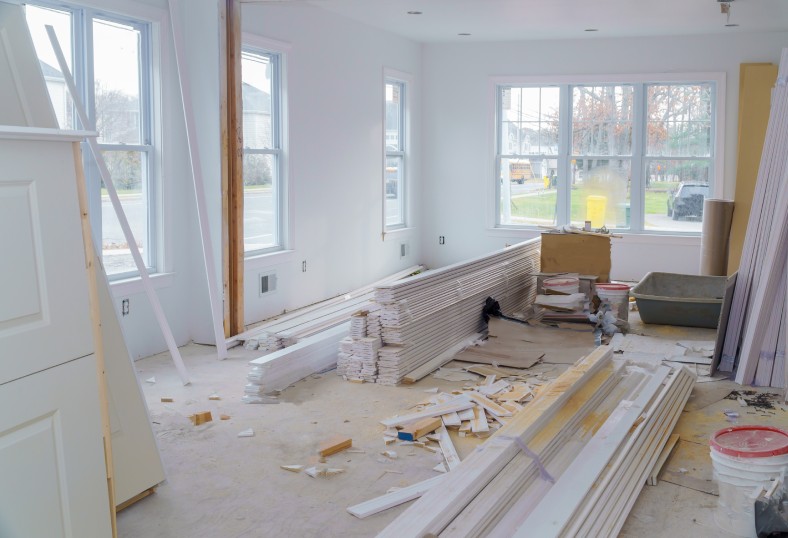
uyers purchasing fixer-uppers, or homeowners planning major repairs, often hit a wall: you need cash to renovate, but you can’t borrow against a home you don’t own yet, and traditional lenders separate purchase loans from improvement financing. FHA 203k renovation loans solve that — you finance both the purchase and the renovation in one loan, with one closing, one interest rate, and one monthly payment. They’re especially useful across St. Louis’s older housing stock, where well-located homes frequently need updated kitchens, new roofs, or modernized systems.
Reverse Mortgages
Homeowners age 62 or older who want to access home equity without monthly payments turn to reverse mortgages. This product converts home equity into cash while you continue to live in your home, with no monthly mortgage payment required. The balance grows over time and is repaid when you sell, move, or pass away; you retain ownership and remain responsible for property taxes, insurance, and maintenance. For many St. Louis retirees, it’s a way to supplement income without selling the home they want to stay in.

Home Equity Conversion Mortgage (HECM)
Senior homeowners seeking the federally-insured version of a reverse mortgage choose a Home Equity Conversion Mortgage. HECM loans are backed by the Federal Housing Administration and include borrower safeguards — most importantly non-recourse protection, meaning you or your heirs never owe more than the home’s value when the loan is repaid. Borrowers use HECM proceeds for healthcare costs, home modifications, or everyday expenses, with several payout options including a lump sum, monthly draws, or a line of credit.

Choosing the Right Lender for a Specialized Loan
Selecting a lender for a non-traditional mortgage means weighing more than rate. Look for institutions experienced in the specific program you need — bank statement and Non-QM lending if you’re self-employed, FHA-approved 203k lenders if you’re renovating, FHA-approved HECM lenders if you’re considering a reverse mortgage. Compare loan products, rates, fees, and underwriting flexibility, and confirm the lender’s reputation and regulatory standing. This is where a broker earns their keep: instead of applying to one bank and hoping, we match your profile to the lenders across our network most likely to approve it on good terms.

Work With a Broker Who Knows These Programs
If traditional banks have turned you down, or you need a loan beyond conventional offerings, specialized programs can help — Non-QM, bank statement, self-employed borrower, FHA 203k, and reverse mortgage products all exist for borrowers whose strengths don’t show up in a standard file. Liberty Lending Consultants works with St. Louis-area borrowers who have non-traditional income, credit challenges, renovation needs, or retirement goals, and we bring the lender relationships to get those loans done. Schedule a free consultation and we’ll tell you honestly which program fits.
Many borrowers pair these programs with our standard loan options, start with a mortgage consultation, or explore investment property financing.

St. Louis Home Loan FAQs: Pre-Approval, First-Time Buyer Programs & More
Can I get a mortgage in the St. Louis area if I'm self-employed and my tax returns show low income?
Yes. Self-employed borrowers — business owners, freelancers, contractors — often show lower taxable income due to legitimate deductions. We offer self-employed and bank statement loan programs that use 12 to 24 months of bank deposits to verify real cash flow instead of tax returns, qualifying you on what you actually earn rather than what your return reports.
What is a Non-QM loan and who qualifies?
A Non-QM loan uses alternative documentation — bank statements, assets, or other income proof — instead of the standard W-2-and-tax-return package. Across St. Louis, they’re popular with entrepreneurs, real estate investors, and anyone whose financial profile doesn’t fit a conventional loan box, including borrowers with a recent credit event.
What is an FHA 203k renovation loan and how does it work?
It lets you finance a home purchase and its renovation in a single loan with one closing — ideal for buyers taking on older St. Louis homes that need updated kitchens, new roofs, or modernized systems. One loan, one rate, one payment, covering both the purchase price and the improvement budget.
How does a reverse mortgage or HECM loan work for seniors?
A HECM, backed by the FHA, lets homeowners age 62 or older convert home equity into cash without monthly mortgage payments. You keep ownership and stay responsible for taxes, insurance, and upkeep. Many St. Louis retirees use it to fund healthcare, home modifications, or daily expenses while staying in their homes.
Do you work with borrowers who've been denied by a bank?
Constantly — it’s most of what this part of our business is. A bank denial usually means your profile didn’t fit that one institution’s box, not that you can’t qualify anywhere. We match denied borrowers to specialized lenders whose underwriting is built for non-traditional income, assets, or credit histories.